
Climate Ready Plants: Future Favorites for the PNW Garden
By Molly van der Burch, King County Master Gardener
Climate change isn’t a far-off concept—it’s here in our Pacific Northwest gardens. Summers are becoming hotter and drier, winters bring heavier storms, and our plant hardiness zone has already shifted from 8b to 9. For professional landscape designers, these shifts raise an essential question: how do we help clients choose plants that can withstand the stresses of a changing climate while keeping gardens beautiful, resilient, and ecologically functional?
That’s where the idea of ‘climate-ready’ plants comes in.
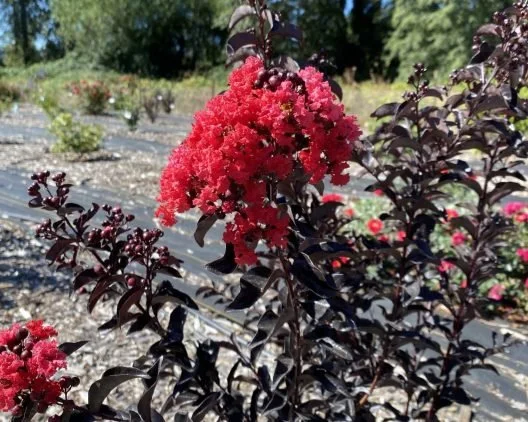
Lagerstroemia indica ‘Center Stage Red’
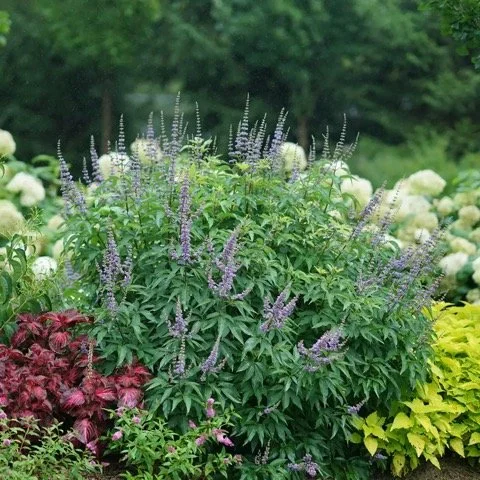
Vitex agnus-castus ‘Blue Diddley’
What Makes a Plant Climate-Ready?
A climate-ready plant isn’t just one that survives—it thrives despite stress. The most resilient plants share several traits:
Heat and drought tolerance, along with the ability to handle heavy winter rains.
Resistance to pests and diseases, including new invasive threats moving north with warming temperatures.
Pollinator friendliness, ensuring they continue to play their part in the ecosystem.
Adaptability to our regional soils, particularly the acidic, well-draining types common across the PNW.
When designers select plants with these qualities, they’re setting up gardens for long-term success and easing maintenance burdens for clients.
Research Lighting the Way: UW’s Climate-Ready Plants Study
One of the most exciting resources for our region is the University of Washington Botanic Gardens’ Climate-Ready Plants Study, part of a multi-state trial that includes California, Arizona, Utah, and Oregon. Seattle-area nursery and landscape professionals, along with Great Plant Picks, helped choose plants for the UW test plots—so the results are immediately relevant to home gardeners and landscape designers.
The study evaluates plants under three irrigation levels after establishment. Graduate students rate them on foliage, flowering, vigor, pest resistance, and overall ‘wow’ factor. The winners are those that shine under the lowest water conditions—a crucial trait for our hotter, drier summers.
So far, some standout performers include:
Lagerstroemia indica ‘Center Stage Red’(Crape Myrtle)–reliable blooms and drought tolerance.
Vitex agnus-castus ‘Blue Diddley’ (dwarf Chaste Tree)–compact form with abundant lavender-blue spikes.
Physocarpus opulifolius ‘Donna May’ (Little Devil Ninebark)–colorful foliage, tough constitution.
Miscanthus sinensis ‘NCMS2B’ (Bandwidth Miscanthus)–a restrained ornamental grass ideal for smaller spaces.
Hibiscus syriacus ‘Purple Pillar’ and Rosa x ‘Oso Easy Urban Legend’–long bloom seasons, resilient habits.
Salvia rosmarinus ‘Arp’ (Rosemary) and Cercis occidentalis (Western Redbud)– durable and drought adapted.
The current phase is focused on vines for shading and cooling. The data from the first year of experiments is set to be released this year—timely research as we look for plants that not only survive but also help moderate urban heat.
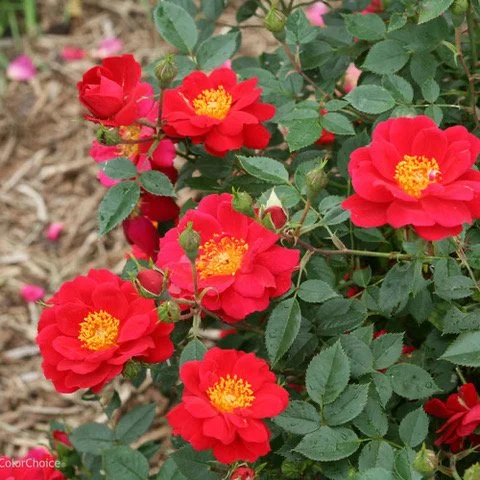
Rosa x ‘Oso Easy Urban Legend’
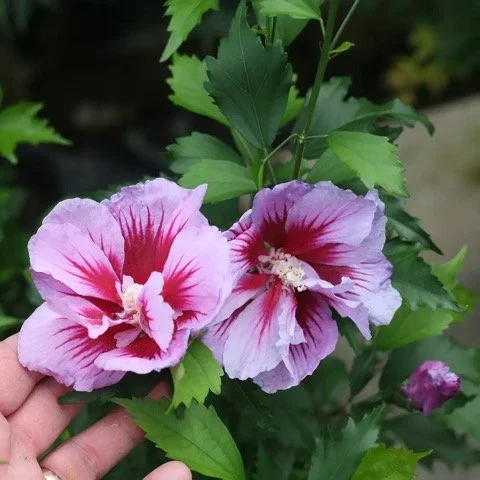
Hibiscus syriacus ‘Purple Pillar’
Natives, Cultivars, and Nativars: Which Adapt Best?
The conversation around climate-ready plants often sparks a familiar debate: natives versus non-natives. Natives have many ecological advantages—they support pollinators, require less fertilizer and pesticides under the right conditions, and contribute to biodiversity. However, they can struggle in urban settings far removed from their natural habitats. Thuja plicata (Western Red Cedar) die-off and Acer macrophyllum (Bigleaf Maple) decline illustrate how some beloved natives are faltering under hotter, drier summers.
Cultivars and nativars (cultivars of native plants) offer a different path. Many are bred for disease and pest resistance, or drought tolerance. For example, cultivars resistant to Dutch Elm Disease or dogwood anthracnose extend the usefulness of otherwise vulnerable species. The tradeoff is reduced genetic diversity, since many cultivars do not produce viable seed or pollen.
The reality? A mix of natives, cultivars, and well-adapted non-natives often creates the most climate-resilient gardens. Designers can play a key role in balancing ecological function with client expectations for aesthetics and low maintenance.
Pollinator Friendliness: What the Studies Tell Us
Resilience isn’t just about plant survival—it’s about ecosystem survival. Pollinators need reliable food sources, and some plant breeding choices unintentionally reduce that value.
Dr. Douglas Tallamy’s research compared native woody plants with their cultivars. His findings:
Changes in plant habit (weeping, compact, tall) had little effect.
Breeding for disease resistance also made no difference in pollinator appeal.
But leaf color changes (e.g., purple foliage) and high variegation reduced nutritional value.
Larger fruit size, as in some blueberry cultivars, increased attractiveness.
While Dr. Tallamy’s work focuses on woody plants, Dr. Annie White’s field trial on flowering plants is looking to see if the different size of the plant and the shape of the flower—double or single—affected the attraction to pollinators.
Native coneflowers with open faces were far more attractive to pollinators than double-flowered cultivars, which offered little or no accessible pollen. To create the beautiful, fluffy double flower some of the stamens and carpels were modified into additional petals.
The lesson for designers: think like a bee and, when possible, choose cultivars that have simple open flowers that are easily accessible to pollinators.
Design Strategies for Climate Resilience
So how do we translate all this research into practical steps for clients? Here are strategies to keep in mind:
Reduce invasives–Early detection and removal are critical, as invasives adapt faster than many natives.
Blend natives and non-natives–Create biodiversity and ensure multiple options for pollinators.
Prioritize pollinator-friendly traits–Favor open-faced flowers, green leaves, and less variegation.
Check plant labels–Match both cold and heat tolerance to current USDA zones.
Use proven drought-tolerant plants–Incorporate trial results like those from UW’s study.
Apply ‘Right plant, right place’–Especially with natives, match conditions as closely as possible.
Group by water needs–Reduces stress and makes irrigation more efficient.
A Hopeful Future
As designers, you’re in a unique position to lead clients through this transition—helping them see that climate-ready planting is not about sacrifice but about resilience, biodiversity, and beauty. Each thoughtful plant choice strengthens gardens against uncertainty while supporting the broader ecosystem.
All photos: UW Climate Ready Plants