
The Art of Efficiency in Landscape Design
By Erica Browne Grivas

A comprehensive design like this is the product of countless efficiency-boosting decisions. Designed by Courtney Olander and installed by AvalonNW. Photo: Courtney Olander.
For most landscape projects, efficiency isn’t a nice-to-have—it’s a necessity. The best designs balance creativity with streamlined construction and long-term performance, keeping budgets, timelines, and site realities in sync.
Kevin Monohan of Avalon NW, a Seattle-based landscape construction firm, says, “Efficiency has to be one of our top priorities—but it’s never the top priority. Client happiness comes first, building something we’re proud of comes second, and profit and efficiency are third.”
Monohan, who holds B.A.s in Horticulture and Landscape Design, ran a design-build firm for ten years before focusing on building, giving him a rare perspective on both sides of the industry.

Kryssie Maybay's Backyard arbor retreat utilizes spans and common wood lengths to minimize waste. Photo: Kismet Design.
As the cost of labor and materials continues to rise, efficiency becomes even more critical. Beyond pinching pennies, smart time and project management can yield outsized benefits—reducing stress and minimizing rework for designers, crews, and clients alike. A well-managed project feels smoother and more predictable, building client trust and satisfaction.
Courtney Olander, principal of Olander Garden Design, often works with Monohan; they agree that connecting designer and contractor as early as possible may be the single most impactful move to get a project started right.
Talk Early and Often
Communication eases the whole process from conception to installation, our experts say. Many designers take on project oversight roles to ease workflow.
“I act as the communications conduit between the contractor and the client,” says Kryssie Maybay of Lake Stevens-based Kismet Design. “That way, contractors can be nose-to-the-ground and do what they do best, and the client feels informed and comfortable.”
“I like to be there more often than I'm needed,” she adds, “so that little nitpicky things get addressed quickly,” helping avoid expensive rework.
Measure Up/Get the Lay of the Land
“Understanding the site and its challenges from the top is critical,” Olander says. Before even meeting with the client, she checks the relevant city and county records site for any Environmentally Critical Areas (ECA’s) on-site that can impact the project.
“This conversation needs to be had with the client, first thing so there are no surprises,” she says. “It can be a huge waste of time and money and kill any efficiency if this isn’t dealt with up front.” Such early homework helps manage expectations and prevent legal issues and costly errors.
Olander says that some designers won’t even start the project without an existing property survey, which can identify issues such as fuzzy property lines that can cause disputes with neighbors.
Having a survey done professionally saves designers significant time in site measurement, but if you’re doing it yourself, she recommends investing in proper tools, like a zip level for slope elevations.
“It's probably my least favorite part of the job, but it’s super, super important,” Olander says. “If you get the slope wrong, and the contractors start the job and realize, ‘Oh my God, we need to add two steps here’, that's expensive, and then you need to explain to the client you made a mistake.”
Designing with Construction in Mind
Designers point to several ways to maximize efficiency through material and detail choices. It’s helpful to determine whether heavy equipment can access the site as you begin considering materials.
Choosing materials that are easy to install, hand-carry, or get onto site—without requiring custom cutting—can significantly reduce labor time. For example, steel panel fencing is much faster to install than wood, Monohan notes.
Similarly, standardized blocks or pavers install faster and at lower cost than custom hand-cut or dry stack stone. With natural stone, a larger than usual overage may be required to ensure you have the right colors and shapes needed for the finished feature. Olander says that repeating existing materials already used on-site is one less decision to make and enhances design cohesion.
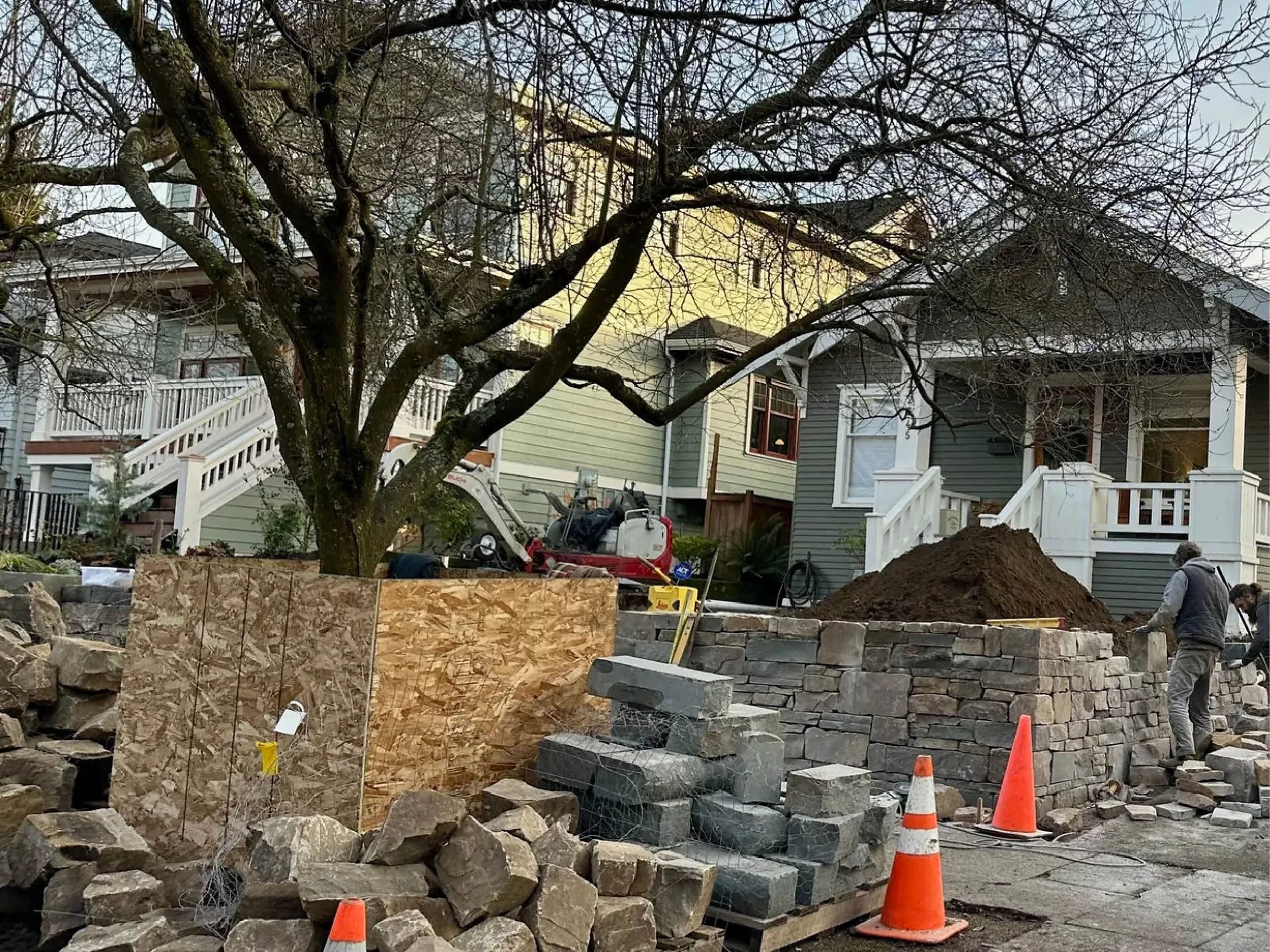
Hand selecting, cutting and placing stone adds significant cost and labor. Here an Avalon NW stone wall project is being installed by Fraser Butterworth (l) and Jeremy Adams (r). Photo: Kevin Monohan.
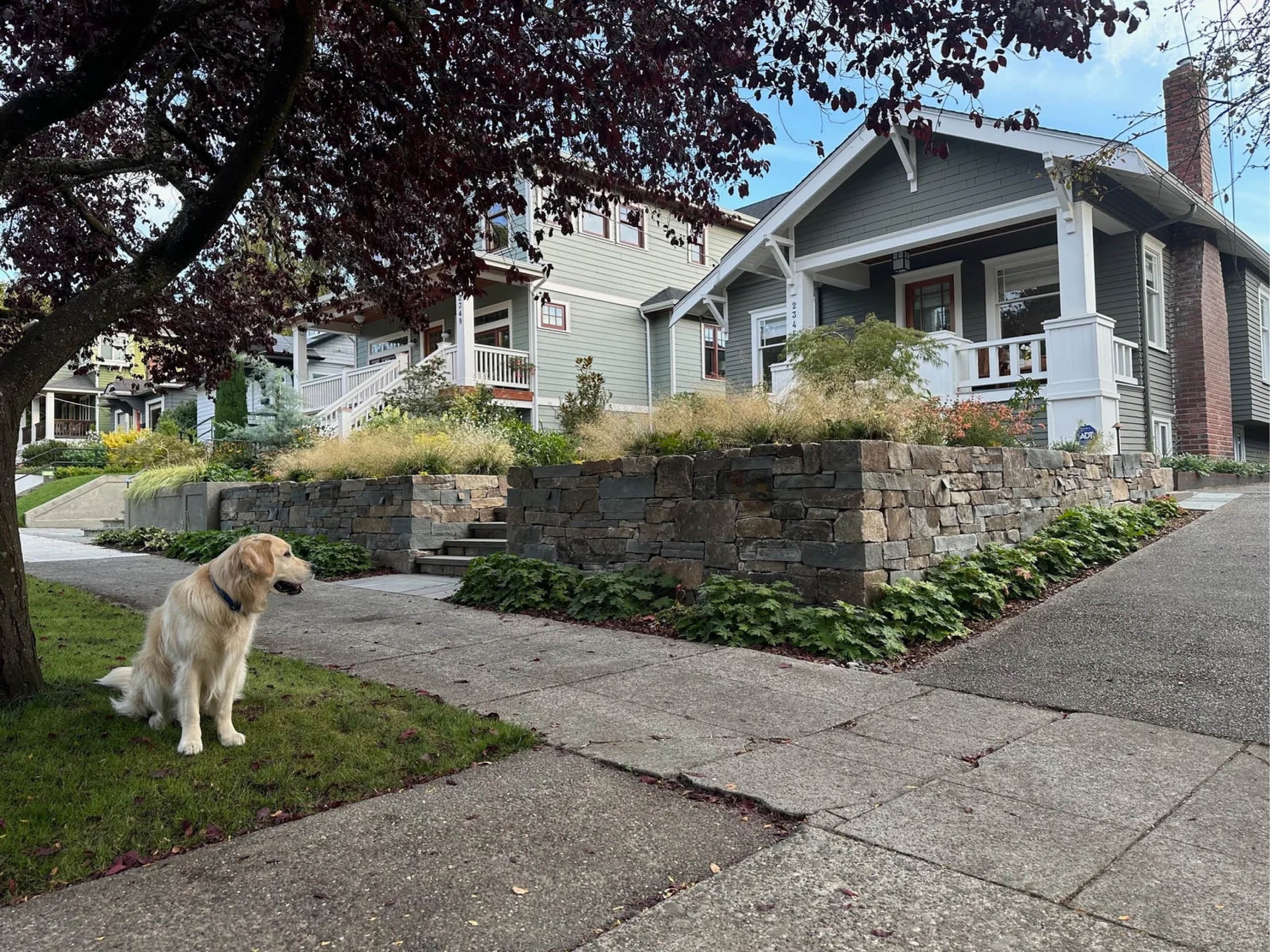
Ollie admires the stone wall, now complete. Photo: Kevin Monohan.
“Selecting locally available materials and materials that can be delivered efficiently can make a big difference for cost of a project,” says Maybay.
Standardizing dimensions, materials, and details is key—avoid specifying random sizes that will create waste with every piece, Maybay points out. For example, when using composite materials for deck design, board lengths typically come in 12’, 16’ and 20’ lengths. Avoiding dimensions that are just shy or slightly over those lengths means saving your client the cost of extra material, extra waste and extra labor.
Maybay also notes that rectilinear designs are more efficient, needing fewer cuts than curved ones.

In this pergola by Kismet Design, both beam spacing and decking were designed with standard board lengths, creating minimal waste. Photo: Kismet Design.
Maybay likes to design ‘buffer zones’ by incorporating gaps at the edge of pathways or walls, giving installers leeway to zhush materials as needed during install. These can be gravel path borders, joints, or planting beds.
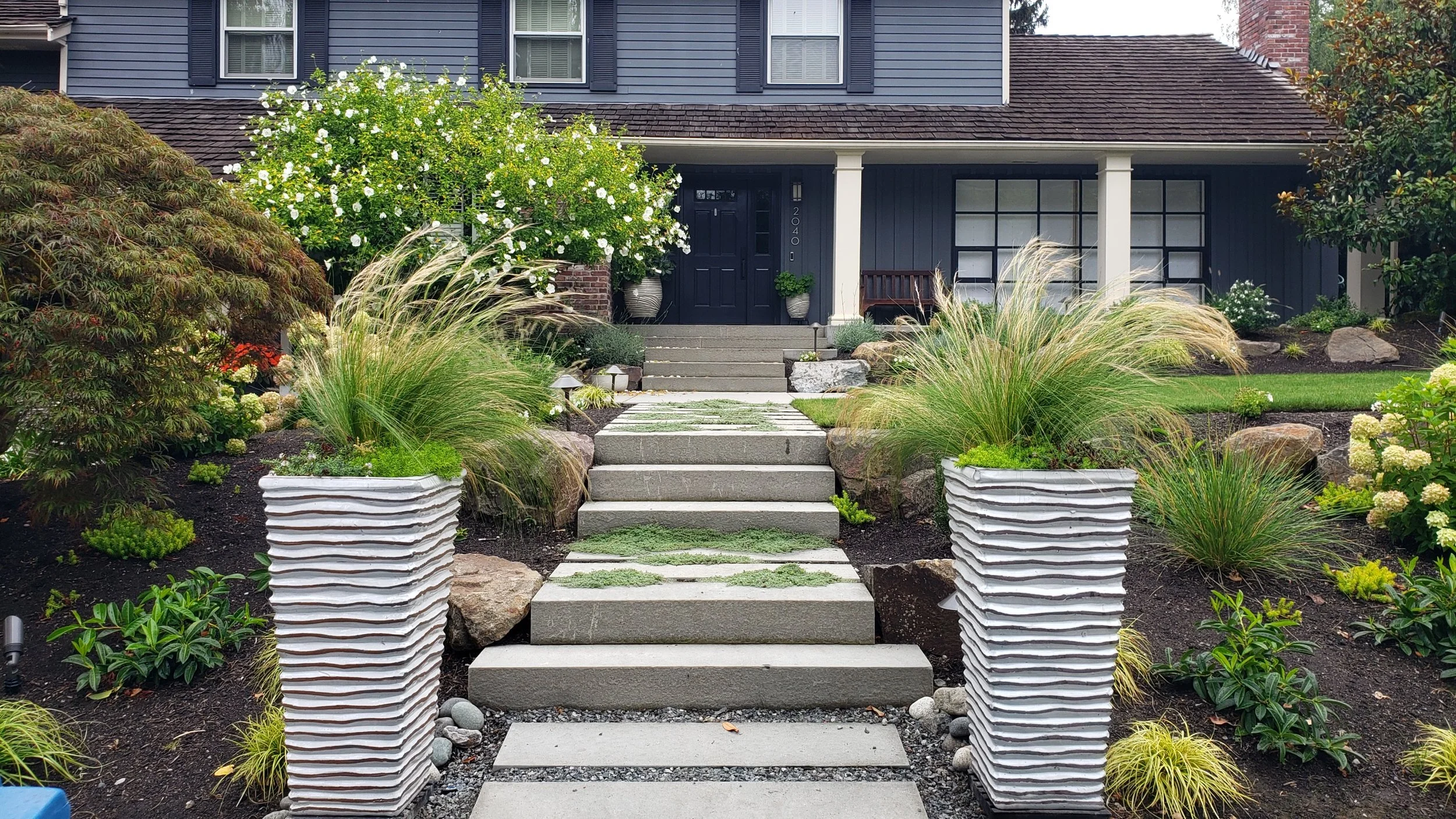
Maybay's stone steps are spaced to avoid cutting pieces, and gaps allow for slight on-site adjustments and ease working with slopes. Photo: Kismet Design.
Workflow
While materials may seem like the first place to look for savings, Monohan says, “Materials are usually only responsible for about a third of the cost of a project. Two-thirds is labor. So, when you talk about efficiency, it's got to be in the labor.”
Creating a team that works well together—and understands project expectations—lays a strong foundation for efficiency. Then, our experts agree, keeping communication strong and addressing issues promptly helps prevent delays.
“Design-as-you-go is so inefficient,” says Monohan. “It can be the best way to do a design, but it is the worst way to make money.”
When it comes to procedure, Monohan and his site foreman order materials early, even if storage is required. They work back-to-front and focus on areas in sequence to avoid doubling back over completed work.
Monohan admits it can be hard to resist fixing a random issue when something grabs his attention, but he’s found it’s worth sticking to the process.
Considering Sustainability
As more clients and designers seek sustainable solutions, efficiency often lies in how those values are integrated into material sourcing, labor, and installation. Reclaimed elements can save sourcing time and reduce waste but often require extra labor. On one Maybay project, existing pavers kept breaking and the ones that were intact needed to be individually hand-brushed to reset and reuse them. She notes that balancing sustainability against labor cost is a project-by-project decision.
Complementary strengths

When communication is clear and consistent, clients, designers and contractors will find the process much smoother. This retaining wall is designed by Olander Designs and installed by Avalon NW. Photo: Courtney Olander.
In a recent North Seattle collaboration, Monohan says Olander approached the renovation with efficiencies throughout, allowing room for two small areas of hand-built stone craftsmanship. “That bit of ‘inefficiency’ elevated the entire yard”, he says. Ultimately, efficiency works best when it supports good design, not dictates it.
When approached thoughtfully, efficiency and creativity can complement each other beautifully. If you plan, keep communication flowing, and pay attention to workflow, it can mean happier clients and crews, more flexibility for design refinement or adaptation, improved margins and fewer change orders—without losing creativity.